Choose the brand aligned with your industry so we can best serve your needs.
For researchers, scientists, and technical professionals: Your one-stop shop for the complete range of laboratory, production, and safety products and services.
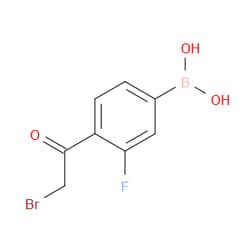
Organic compounds that contain a carbon atom bonded to a halogen atom, and an oxygen atom via a double bond; commonly derived from an oxoacid by replacing a hydroxyl group with a halogen atom.
Small and Specialty Supplier Partner Small and/or specialty supplier based on Federal laws and SBA requirements. Learn More
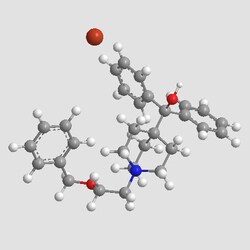
Otilonium Bromide (CAS 26095-59-0) is an orally-administered muscarinic acetylcholine receptor (mAChR) antagonist exhibiting smooth muscle relaxation properties Its mechanism involves inhibition of calcium mobilization within intestinal smooth muscle cells lowering intracellular free calcium levels and thus attenuating muscle contractile activity In research settings Otilonium Bromide is commonly employed to investigate pathophysiological processes in irritable bowel syndrome (IBS) and dysfunctions associated with intestinal smooth muscle motility
Encompass Procurement Services Non-distribution item offered as a customer accommodation; additional freight charges may apply. Learn More
Small and Specialty Supplier Partner Small and/or specialty supplier based on Federal laws and SBA requirements. Learn More
Umeclidinium bromide is a novel muscarinic acetylcholine receptor (mAChR) antagonist. It exhibits high affinity for human M1-M5 mAChRs, with Ki values ranging from 0.05 to 0.16 nM. This compound demonstrates antagonist activity at the human cloned muscarinic M3 receptor and inhibits the human ether-a-go-go-related gene (hERG) channel tail current.
Targets mAChR1 and mAChR5.
Inhibits acetylcholine-induced calcium mobilization in CHO cells.
Demonstrates slow functional reversibility at M3 mAChRs.
Inhibits human ether-a-go-go-related gene channel tail current.
Encompass Procurement Services Non-distribution item offered as a customer accommodation; additional freight charges may apply. Learn More
Small and Specialty Supplier Partner Small and/or specialty supplier based on Federal laws and SBA requirements. Learn More
1,3,5-Tri-O-benzoyl-a-D-ribofuranose is a purine nucleoside analog that exhibits broad antitumor activity, particularly against indolent lymphoid malignancies. Its anticancer mechanisms involve inhibiting DNA synthesis and inducing apoptosis, among other processes.
Purine nucleoside analog
Exhibits broad antitumor activity
Targets indolent lymphoid malignancies
Inhibits DNA synthesis
Induces apoptosis
Useful for cancer research
Encompass Procurement Services Non-distribution item offered as a customer accommodation; additional freight charges may apply. Learn More
Small and Specialty Supplier Partner Small and/or specialty supplier based on Federal laws and SBA requirements. Learn More
Cyanine 3.5 bromide is a red reactive fluorescent dye used for covalent labeling of primary amines on peptides, proteins, and oligonucleotides for fluorescence imaging and detection. It exhibits red fluorescence with excitation near 591 nm and emission near 604 nm, and is typically supplied as a small research-scale powdered quantity.
Reactive NHS ester for covalent labeling of primary amines.
Red fluorescence with typical excitation ~591 nm and emission ~604 nm.
Molecular formula C42H44BrN3O4, molecular weight 734.72 g·mol-1.
Purity reported around 98.6%.
Supplied as a 10 mg powder; store at -20 °C and protect from light.
Suitable for labeling peptides, proteins, and oligonucleotides in imaging applications.
Stable in common organic solvents; handle with appropriate safety precautions.
Encompass Procurement Services Non-distribution item offered as a customer accommodation; additional freight charges may apply. Learn More
Small and Specialty Supplier Partner Small and/or specialty supplier based on Federal laws and SBA requirements. Learn More
Oleyl bromide is a hydrophobic compound that can carry out a ring-opening reaction through a process called "encapsulation." It can also be used as the starting material in the synthesis of oleylphosphonates.
Hydrophobic compound.
Can carry out ring-opening reaction through encapsulation.
Used as a starting material in the synthesis of oleylphosphonates.
For research use only.
Encompass Procurement Services Non-distribution item offered as a customer accommodation; additional freight charges may apply. Learn More
Small and Specialty Supplier Partner Small and/or specialty supplier based on Federal laws and SBA requirements. Learn More
Oleyl bromide ((Z)-1-Bromooctadec-9-ene) is a hydrophobic compound capable of undergoing a ring-opening reaction through a process known as "encapsulation." It can also serve as a starting material in the synthesis of oleylphosphonates.
Hydrophobic compound.
Can carry out ring-opening reactions via "encapsulation."
Used as a starting material in the synthesis of oleylphosphonates.
Ships at room temperature in continental US.
Pure form storage: -20°C for 3 years, 4°C for 2 years.
In solvent storage: -80°C for 6 months, -20°C for 1 month.
Encompass Procurement Services Non-distribution item offered as a customer accommodation; additional freight charges may apply. Learn More
Small and Specialty Supplier Partner Small and/or specialty supplier based on Federal laws and SBA requirements. Learn More
Demecarium Bromide (BC-48) is a potent cholinesterase inhibitor known for its apparent affinity (Kiapp) of 0.15 μM. It serves as a glaucoma agent, effective in both normotensive and inherited glaucoma conditions. In vivo studies demonstrate its ability to cause long-term miosis and decrease intraocular pressure.
Potent cholinesterase inhibitor
Apparent affinity (Kiapp) of 0.15 μM
Used as a glaucoma agent
Causes long-term miosis
Decreases intraocular pressure (IOP)
Encompass Procurement Services Non-distribution item offered as a customer accommodation; additional freight charges may apply. Learn More
Small and Specialty Supplier Partner Small and/or specialty supplier based on Federal laws and SBA requirements. Learn More
Cetrimonium bromide (CTAB) is a quaternary ammonium and an orally active cationic surfactant. It exhibits toxicity and has an anticancer effect. This compound inhibits cell migration and invasion by modulating both canonical and non-canonical TGF-β signaling pathways and can also be utilized for DNA extraction.
Cationic surfactant
Exhibits toxicity and anticancer effect
Inhibits cell migration and invasion
Modulates TGF-β signaling pathways
Can be utilized for DNA extraction
Encompass Procurement Services Non-distribution item offered as a customer accommodation; additional freight charges may apply. Learn More
Small and Specialty Supplier Partner Small and/or specialty supplier based on Federal laws and SBA requirements. Learn More
Umeclidinium bromide is a novel mAChR antagonist with high affinity (Ki) for cloned human M1-M5 mAChRs, ranging from 0.05 to 0.16 nM. It is intended for research use only and not for patient use.
Inhibits the human ether-a-go-go-related gene channel tail current in human embryonic kidney 293 cells (IC50=9.4 μM).
Potent agent demonstrating slow functional reversibility at cloned human M3 mAChRs and at endogenous mAChR in isolated human bronchus.
Utilized in ligand binding assays with [3H]-N-methyl scopolamine for mAChR characterization.
Applicable for in vitro studies and in vivo experiments in mice.
Encompass Procurement Services Non-distribution item offered as a customer accommodation; additional freight charges may apply. Learn More
Small and Specialty Supplier Partner Small and/or specialty supplier based on Federal laws and SBA requirements. Learn More
Cetrimonium bromide (CTAB) is a quaternary ammonium, orally active cationic surfactant. It exhibits toxicity and anticancer effects. It inhibits cell migration and invasion by modulating canonical and non-canonical TGF-β signaling pathways. Cetrimonium bromide can also be used for DNA extraction.
Cationic surfactant
Exhibits toxicity and anticancer effects
Inhibits cell migration and invasion by modulating canonical and non-canonical TGF-β signaling pathways
Can be used for DNA extraction
Does not affect growth of SK-HEP-1 cells at 1-5 μM for 24 hours
Attenuates cellular migration and invasion of SK-HEP-1 cells at 5 μM for 16-24 hours
Inhibits protein expression of MMP-2 and MMP-9, increases TIMP-1 and TIMP-2, and restrains Rac1, cdc42, and RhoA in SK-HEP-1 cells at 5 μM for 24 hours
Induces apoptosis in human head and neck cancer (HNC) cells at 5 μM for 12-72 hours
Encompass Procurement Services Non-distribution item offered as a customer accommodation; additional freight charges may apply. Learn More
Small and Specialty Supplier Partner Small and/or specialty supplier based on Federal laws and SBA requirements. Learn More
N-Benzoyl-(2R,3S)-3-phenylisoserine is a crucial Taxol C-13 side chain, vital for the potent antitumor activity of Taxol. This product is intended for research and analytical applications.
Taxol C-13 side chain
Crucial for strong antitumor activity
High purity (99.48%)
Encompass Procurement Services Non-distribution item offered as a customer accommodation; additional freight charges may apply. Learn More